Imagine stepping into your backyard and finding fresh vegetables, useful herbs, fruit, and other resources that can help reduce your dependence on the grocery store.
For many people, the idea of becoming more self-reliant starts with something simple: learning how to grow food at home. You do not necessarily need a huge farm or expensive equipment to begin. Even a small backyard can become a productive space when it is planned carefully.
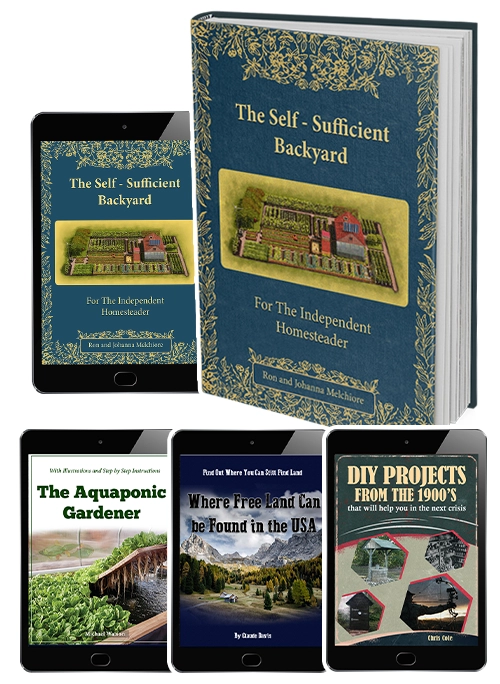
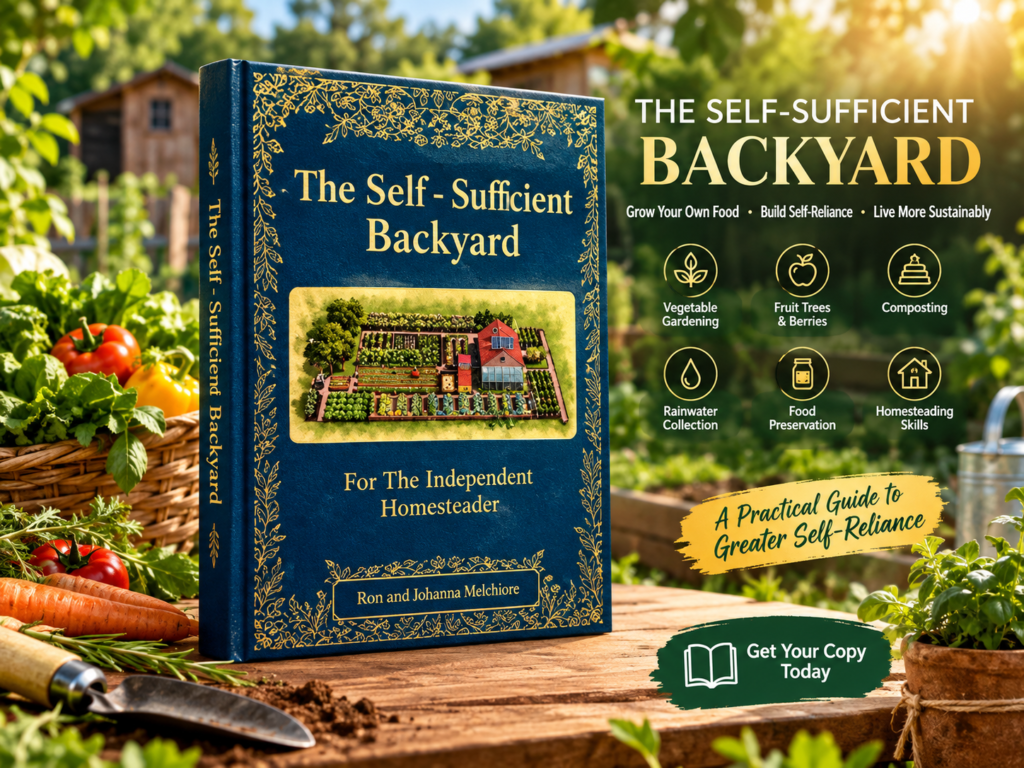
That is the idea behind The Self-Sufficient Backyard, a printed book aimed at people interested in becoming more self-reliant and making better use of their available outdoor space.
In this guide, we will look at what makes the concept of a self-sufficient backyard appealing, why growing your own food is becoming increasingly interesting, what beginners should consider before starting, and how a resource such as The Self-Sufficient Backyard can fit into a broader journey toward self-reliance.
What Is The Self-Sufficient Backyard?
The Self-Sufficient Backyard refers to the broader idea of transforming an ordinary backyard into a more productive and useful environment.
Instead of viewing a backyard simply as an area for decoration or recreation, self-sufficient living encourages homeowners and gardeners to think about how the space can provide practical benefits.
Depending on the size of the property, climate, available resources, and local regulations, a productive backyard might include:
- Vegetable gardens
- Herbs
- Fruit trees
- Berry plants
- Composting
- Rainwater collection
- Food preservation
- Small-scale food production
- Seed saving
- Gardening systems
- Sustainable landscaping
The goal does not have to be complete independence from supermarkets or modern infrastructure.
For many beginners, a more realistic goal is greater self-reliance.
Growing even some of your own food can teach valuable skills, reduce dependence on outside sources for certain products, and give you greater control over how some of your food is produced.
Why Is Growing Your Own Food Becoming More Popular?
Growing your own food is not a new idea. People have cultivated gardens for thousands of years.
However, interest in backyard gardening, homesteading, sustainability, and self-sufficient living continues to attract people who want practical skills they can use at home.
One reason is that gardening provides a direct connection between effort and results.
You plant a seed, care for the plant, learn from mistakes, and eventually harvest something you can use.
Another reason is control.
When you grow vegetables yourself, you can choose which varieties to plant, how to care for them, and when to harvest them.
There is also an educational benefit. A backyard garden can teach children and adults about seasons, soil, plants, food production, patience, and resource management.
For someone interested in self-sufficient living, gardening can therefore be a practical starting point.
What Can a Self-Sufficient Backyard Provide?
The answer depends heavily on your property, climate, skills, budget, and available water.
A small backyard will obviously have different possibilities from a large rural property.
However, even limited space can potentially be used productively.
1. Fresh Vegetables
Vegetables are one of the most obvious starting points.
Depending on your climate and growing conditions, you may be able to grow crops such as:
- Tomatoes
- Lettuce
- Spinach
- Carrots
- Beans
- Peppers
- Cucumbers
- Radishes
- Onions
- Squash
Beginners should not feel pressured to grow everything at once.
Starting with a few vegetables that grow well locally can be much easier than attempting a complicated garden immediately.
2. Herbs
Herbs can require relatively little space and can be grown in containers as well as garden beds.
Common choices include basil, mint, parsley, coriander, rosemary, and other herbs suited to your climate.
A small herb garden can therefore be a convenient introduction to home gardening.
3. Fruit
Fruit trees and berry plants can provide another long-term source of food.
However, fruit production often requires more planning than growing annual vegetables.
Before planting a tree, consider its mature size, sunlight requirements, water needs, soil conditions, and whether the climate is appropriate.
Planning is especially important because fruit trees are a longer-term investment.
4. Compost
Composting can turn suitable organic waste into useful material for your garden.
Kitchen scraps and garden materials can potentially be composted depending on the system you use.
Good composting practices can help reduce household waste while producing a useful garden amendment.
5. Food Preservation
Growing food is only part of becoming more self-reliant.
Learning how to preserve food can also be valuable.
Depending on the food and method, preservation may include drying, freezing, fermenting, or other appropriate techniques.
Food safety is extremely important here. Preservation methods should be followed carefully because incorrect techniques can create health risks.
The Self-Sufficient Backyard for Beginners
If you are completely new to gardening, the idea of creating a self-sufficient backyard may sound overwhelming.
It does not have to be.
The best approach for many beginners is to start small.
Instead of trying to create a complete homestead immediately, choose one practical project.
For example, you could begin with a small vegetable garden.
Once you understand watering, planting, soil preparation, pests, harvesting, and seasonal changes, you can expand.
This gradual approach allows you to build experience without spending unnecessary money on systems you may not need.
Step 1: Study Your Space
Before buying seeds or building garden beds, examine your backyard.
Look at:
- How much sunlight different areas receive
- Where water is available
- Soil condition
- Drainage
- Wind exposure
- Available planting space
- Existing trees and structures
- Access to the garden
Sunlight is particularly important because many food crops need several hours of direct sunlight.
A beautiful garden plan will not perform well if the plants are placed in unsuitable conditions.
Step 2: Start With Suitable Crops
One of the biggest beginner mistakes is choosing plants based only on what looks appealing.
Instead, research which crops perform well in your local climate and season.
A vegetable that grows easily in one region may perform poorly somewhere else.
Start with a few crops and learn their requirements.
As your experience grows, you can introduce additional plants.
Step 3: Improve Your Soil
Healthy soil is one of the foundations of productive gardening.
Plants need appropriate nutrients, moisture, air, and root conditions.
Depending on your existing soil, you may need to improve its structure or fertility.
Organic matter and compost can be useful components of many garden systems, but the exact approach should depend on your soil and plants.
If possible, learning about your soil before making major amendments can save time and money.
Step 4: Think About Water
Water is one of the most important resources in any garden.
A garden may look excellent when first planted but struggle if watering becomes inconsistent.
Consider how much water your crops need and how easily you can provide it.
Efficient watering can become particularly important in hot or dry climates.
Some gardeners use methods such as drip irrigation or other targeted watering systems to deliver water more efficiently.
Always follow local rules regarding water collection and irrigation.
Step 5: Learn From Your First Season
Your first garden does not need to be perfect.
In fact, mistakes can be one of the most useful parts of the learning process.
You may plant too early, water too much, choose the wrong location, underestimate pests, or discover that a particular crop simply does not perform well in your conditions.
Keep notes.
Record what you planted, when you planted it, how it performed, and what you would change next time.
Over several seasons, this information can become extremely valuable.
Self-Sufficiency Is More Than Gardening
A common misunderstanding is that self-sufficient living simply means growing vegetables.
Gardening is important, but self-reliance can involve many different skills.
These may include:
- Cooking
- Food preservation
- Basic repairs
- Composting
- Gardening
- Seed management
- Resource conservation
- Meal planning
- Budgeting
- Learning practical household skills
The purpose is not necessarily to eliminate every form of outside dependence.
Instead, the broader concept is about developing useful knowledge and practical abilities.
How The Self-Sufficient Backyard Can Fit Into Your Plans
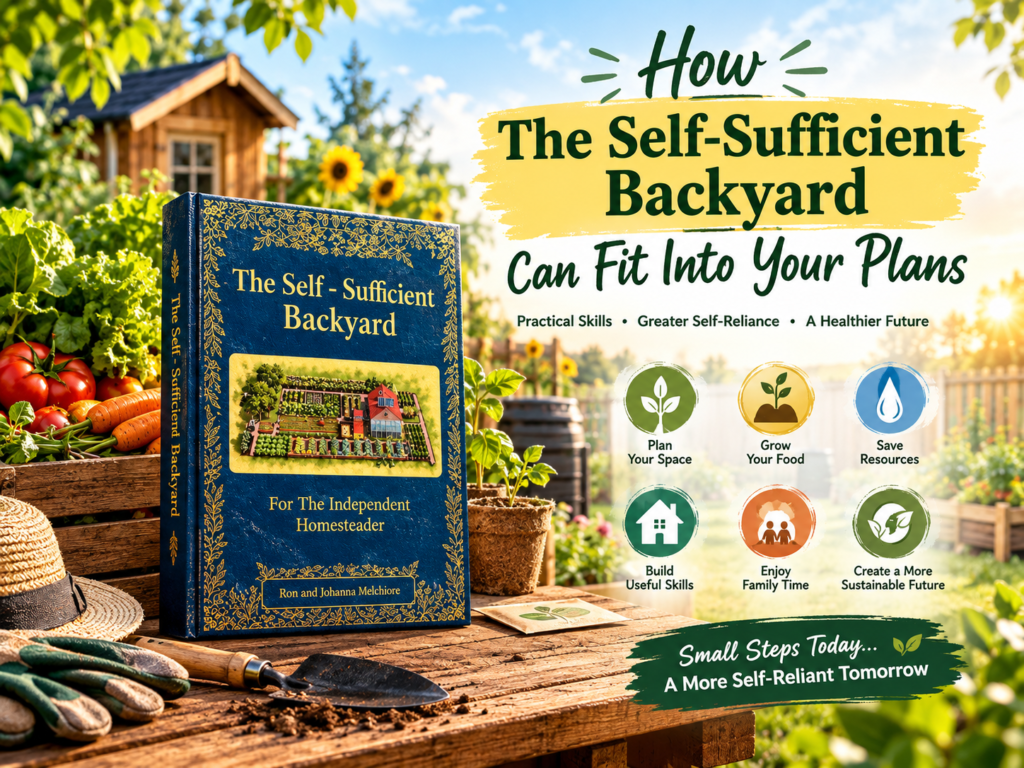
A resource such as The Self-Sufficient Backyard can be useful for someone who wants to explore the subject in a more structured way.
Rather than collecting random information from dozens of websites, videos, and social media posts, a dedicated book can provide a single resource to study and refer back to.
A printed book can also be convenient for people who prefer reading away from a computer or phone.
You can keep it available while planning your garden, making notes, or working outside.
However, no single book can replace local knowledge.
Gardening depends heavily on climate, soil, water, available space, regulations, and plant varieties.
Use general guidance as a starting point and adapt it to your specific conditions.
Is a Self-Sufficient Backyard Expensive?
It can be—but it does not have to be.
One of the biggest advantages of starting small is that you can control your costs.
You do not need to immediately purchase every gardening tool, raised bed, irrigation system, greenhouse, or other piece of equipment you see online.
Start with the basics.
For example, a beginner may need:
- Suitable seeds
- Containers or a small garden area
- Basic soil or compost
- A watering method
- Simple gardening tools
As you gain experience, you can decide which upgrades actually provide value.
This approach is generally more practical than spending heavily before understanding what your garden needs.
Building Food Security at Home
The phrase food security can sound complicated, but at a household level it can involve having more reliable access to some food resources.
A backyard garden cannot realistically provide every food a household consumes, especially when space is limited.
But even partial production can be useful.
For example, a household might grow herbs and vegetables while continuing to purchase grains, oils, proteins, and other foods.
Over time, learning how to grow, harvest, store, and use food can increase practical knowledge and reduce dependence on a single source for certain products.
Common Mistakes to Avoid
If you are planning a self-sufficient backyard, avoid making the process unnecessarily complicated.
Trying to Grow Everything
Start with a manageable number of crops.
Ignoring Your Climate
Local growing conditions matter more than generic gardening advice.
Planting Without Planning
Think about sunlight, spacing, water, and mature plant size before planting.
Spending Too Much Too Soon
Learn first and invest gradually.
Expecting Immediate Results
Gardening is seasonal. Some projects require months or years to mature.
Neglecting Water Management
A productive garden needs a reliable and appropriate watering strategy.
Ignoring Local Rules
Check local regulations before installing structures, collecting water, keeping animals, or making other major changes to your property.
Who Might Be Interested in The Self-Sufficient Backyard?
The concept may appeal to several types of readers.
Beginners
People who have never had a garden can use the subject as a starting point for learning practical skills.
Home Gardeners
Existing gardeners may be interested in expanding from simple gardening toward greater self-reliance.
Homesteading Enthusiasts
People interested in homesteading may find backyard food production particularly relevant.
Families
Parents may want to introduce children to gardening and where food comes from.
People Interested in Sustainable Living
Those trying to reduce waste and make better use of household resources may find self-sufficient gardening relevant.
Why Start in 2026?
There is no need to wait for the perfect moment to begin learning practical skills.
If becoming more self-reliant is one of your goals for 2026, starting with a small project can be more realistic than creating an ambitious plan that becomes difficult to maintain.
You could make this year the beginning of a longer-term backyard project.
Start with one garden bed.
Grow a few suitable vegetables.
Learn how your soil behaves.
Understand your local growing season.
Then improve the system based on what you learn.
Over time, small improvements can produce a much more useful backyard.
Final Thoughts on The Self-Sufficient Backyard
The Self-Sufficient Backyard represents an idea that goes beyond simply planting vegetables.
It is about using available space more intentionally, developing practical skills, learning how to produce some of your own food, and becoming more self-reliant over time.
You do not need a large property to begin.
You also do not need to become completely independent from the modern food system.
For many people, the realistic goal is simply to become more capable and less dependent in certain areas.
Whether you are interested in backyard gardening, homesteading, sustainable living, food production, or personal self-reliance, learning the fundamentals can give you a strong starting point.
The most important thing is to begin with a manageable project, learn from experience, and expand gradually.
If you want a dedicated resource to explore the subject further, The Self-Sufficient Backyard printed book is worth looking into as part of your research and planning.
Ready to Explore The Self-Sufficient Backyard?
If you are serious about learning more about growing your own food and creating a more productive backyard, explore The Self-Sufficient Backyard and see whether it fits your goals.
[Check The Self-Sufficient Backyard Book / View Offer →]
Disclosure: This article may contain affiliate links. If you purchase through a qualifying link, DigitalAff.com may earn a commission at no additional cost to you.
Frequently Asked Questions
What is The Self-Sufficient Backyard?
The Self-Sufficient Backyard is a printed book focused on the broader concept of becoming more self-reliant through productive backyard use, food growing, gardening, and related practical skills.
Can beginners use The Self-Sufficient Backyard?
The subject is relevant to beginners who want to learn more about self-sufficient living and growing their own food. Beginners should also adapt general information to their local climate, soil, water availability, and regulations.
Do I need a large backyard to grow my own food?
No. The amount of food you can produce depends on your space and conditions, but even a small area, containers, or a compact garden can potentially be productive.
Is backyard gardening expensive?
It can be expensive if you purchase many systems and tools immediately, but you can also begin with a small project and expand gradually.
What should I grow first?
Choose crops that are suitable for your local climate and season and that you actually enjoy eating. Starting with a few relatively manageable crops is usually easier than attempting a large garden immediately.
Can a backyard make me completely self-sufficient?
For most households, complete self-sufficiency is unrealistic, particularly with limited space. A more practical goal is increasing self-reliance by producing some food and developing useful skills.
Is The Self-Sufficient Backyard available as a printed book?
The product referenced in this article is the printed edition of The Self-Sufficient Backyard. Check the current product offer for availability, format, and purchasing details.
Related Resources on DigitalAff.com
If you are interested in building practical skills, sustainable living, online income, and digital resources, explore more guides on DigitalAff.com.
You may also be interested in:
- Print on Demand Business Guide
- AI Business and Career Handbook
- Start Affiliate Marketing Like a Pro
- Healthy Heart Solution Kit E-books
These resources cover different areas, so choose the guide that matches your current goals.
Conclusion
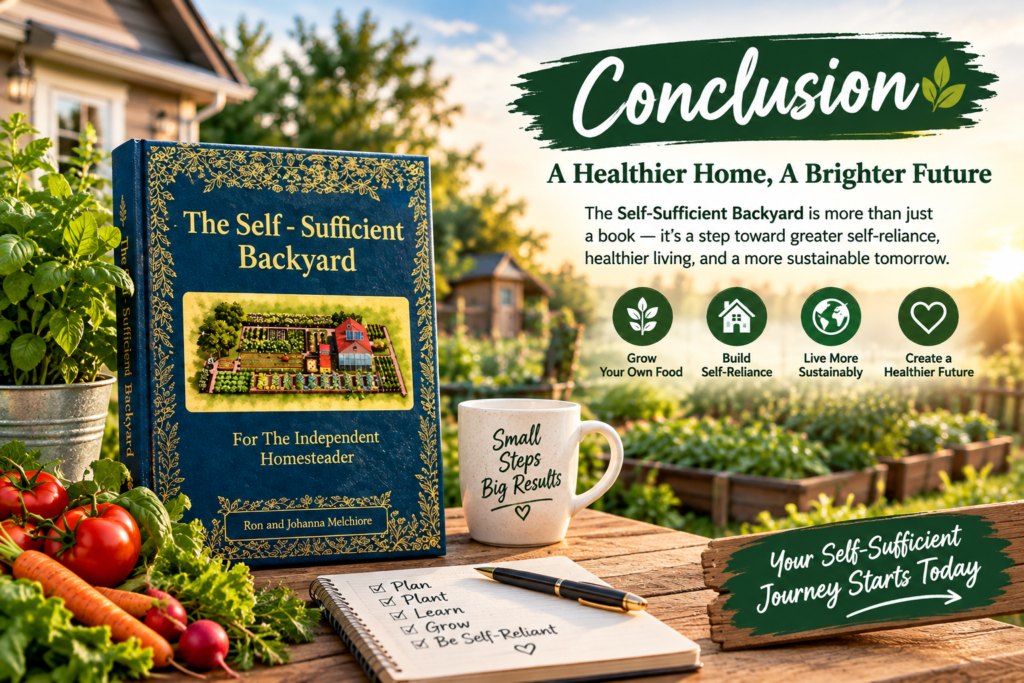
Creating a self-sufficient backyard does not happen overnight.
It starts with learning.
Then comes planning, planting, testing, harvesting, making mistakes, and improving.
Whether your goal is to grow a few vegetables, learn homesteading skills, improve food security, or simply become more self-reliant, your backyard can become a practical place to start.
The Self-Sufficient Backyard provides a resource for exploring these ideas in greater depth.
Start small, learn continuously, and build your backyard system one step at a time.